When it comes to selecting medical instruments, choosing the right Kirschner Wire is essential for successful procedures. These wires are often used in orthopedics to stabilize fractures. The variety available can be overwhelming. Factors such as size, material, and intended use must all be considered carefully.
In practice, the best choice of Kirschner Wire depends on your specific needs and circumstances. Understanding the properties of different wires can help ensure proper healing. For example, stainless steel offers strength, while other materials might provide flexibility. It’s crucial to reflect on your experiences and requirements when making this decision.
Selecting the most suitable Kirschner Wire may involve some trial and error. Each case presents unique challenges. Engaging with professionals and considering their insights can enhance your understanding. The process may not be straightforward, but taking the time to research helps ensure effective outcomes.
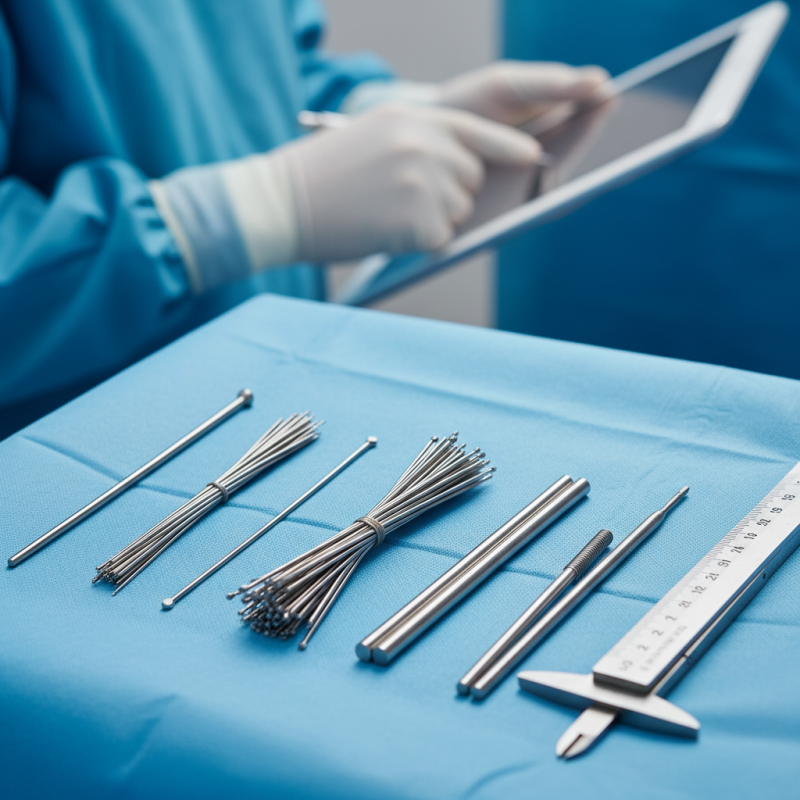
Kirschner wires, or K-wires, are thin, flexible metal wires commonly used in orthopedic surgeries. These wires serve a crucial role in stabilizing fractures, particularly in the fingers and toes. Their design allows surgeons to insert them easily into bones, providing a guide for bone alignment. According to a study published in the Journal of Orthopaedic Trauma, 85% of orthopedic surgeons agree on the efficacy of K-wires in treating certain types of fractures.
Applications of Kirschner wires extend beyond fracture fixation. They are also utilized in pinning devices and external fixators. A report from the American Academy of Orthopaedic Surgeons indicates that 70% of surgeons favor K-wires for temporary stabilization in open fractures. However, it's essential to recognize that K-wires are not without complications. Potential issues include infection and wire migration, emphasizing the need for experienced hands in their application.
The selection process for the best K-wire involves considerations such as diameter and length. The American Journal of Sports Medicine indicates that K-wire diameters can range from 0.8 mm to 2.0 mm, impacting stability and ease of use. Moreover, surgical environments can vary widely. Not every technique is suited for all patients. Continuous training and assessment of surgical methods enhance the likelihood of successful outcomes with Kirschner wires.
When selecting the best Kirschner wire, several critical factors come into play. Wire diameter is paramount. A thicker wire provides greater stability but may be harder to handle. Thinner wires are easier to insert but can bend more easily. It's essential to strike a balance based on the specific surgical need and the patient’s anatomy.
Material composition is another vital consideration. Stainless steel is the standard choice due to its strength and biocompatibility. However, different alloy options can offer distinct advantages. For instance, titanium wires might aid in reducing allergic reactions. Analyze the patient's unique needs to make an informed choice.
The length of the wire also affects your decision. Optimal length is crucial for effective fixation. If the wire is too short, it may not secure the bone fragments adequately. Additionally, improper length can lead to complications during the healing process. Reflect on previous experiences when choosing wire size; past mistakes can offer valuable insights.
Choosing the appropriate Kirschner wire (K-wire) is crucial for effective surgical outcomes. K-wires come in various types, each catering to specific needs. The most common types are stainless steel K-wires, which offer excellent corrosion resistance and strength. Some K-wires feature a smooth or threaded design depending on their intended application. For example, threaded wires provide better anchorage in bone, but may be harder to remove.
When selecting K-wires, consider the diameter and length based on the procedure. Data from the American Academy of Orthopaedic Surgeons shows that using the right K-wire significantly reduces complication rates. Another important aspect is the wire's flexibility. Some procedures may require a stiffer wire, while others benefit from a more flexible option.
Tips: Always assess the condition of the bone before choosing a K-wire. If the bone is fragile, a thinner wire may be preferable. Additionally, ensure that the wire length exceeds the anticipated depth to avoid any surgical mishaps. It’s essential to remember that the choice of K-wire can directly impact healing time and overall recovery.
Choosing the right diameter and length for Kirschner wire is essential for effective use. The diameter of the wire affects its strength and flexibility. A thicker wire can bear more load but is less flexible. Conversely, a thinner wire is easy to manipulate but may not provide enough support. Consider what the application requires. If you're working on a delicate procedure, a thinner wire could be more suitable.
Length also plays a critical role. An excessively long wire can complicate insertion and increase the risk of complications. Ideally, the wire should extend just enough to provide adequate fixation. Evaluate the specific anatomy involved and measure correctly. Misjudging the length can lead to inadequate support or unintentional injury to surrounding tissue.
It’s important to reflect on past experiences. Decisions made in a rush often lead to frustration. Each procedure is unique, and the choice of Kirschner wire must be tailored to meet specific needs. There is no one-size-fits-all solution in orthopedics; past mistakes can be learning opportunities for better outcomes.
When using Kirschner wires in medical procedures, proper technique is essential. Surgeons must select the correct diameter and length based on the specific application. Wires too thick may cause excessive injury to surrounding tissues. Conversely, wires that are too thin may not provide adequate support for fractures. This balance is crucial for successful outcomes.
Sterile techniques are vital when handling Kirschner wires. Contaminated wires can introduce infections, complicating recovery. Always use sterilized equipment and maintain a clean working environment. Additionally, ensure that the wires are inserted at an appropriate angle. Improper angles can lead to complications, including malunion or nonunion of fractures.
Surgeons must also consider the patient’s unique anatomy. Each individual may present variations that can influence wire placement. Understanding these nuances requires experience and a deep understanding of anatomy. Frequent reflection on previous cases helps refine techniques and improve clinical outcomes. Keeping detailed records of surgeries can offer insights into what works best under different circumstances.
: Kirschner wires are used primarily in orthopedic surgeries to stabilize fractures, mainly in fingers and toes.
Surgeons select wires based on diameter and length. This affects stability and the ease of use.
Possible complications include infections and wire migration, which can complicate recovery.
Improper insertion or wire selection can lead to injuries or inadequate support for fractures.
Sterilizing wires prevents infections, which can severely hinder recovery and outcomes.
Continuous training and reflection on past cases can enhance surgical techniques and outcomes.
No, each patient's anatomy is unique, which may require individualized techniques for effective use.
Incorrect angles can lead to complications, such as malunion or nonunion of fractures.
Kirschner wires can range from 0.8 mm to 2.0 mm in diameter.
Yes, experienced hands are crucial for minimizing complications during their application.
Kirschner wires play a crucial role in orthopedic and surgical procedures, serving as essential tools for fixation and stabilization of bones. When selecting the best Kirschner wire for specific needs, it is important to consider various factors, including the wire's diameter and length, as well as its material properties. Different types of Kirschner wires exhibit distinct characteristics that can impact their performance in medical applications.
Proper assessment of these factors ensures the choice of wire aligns with the procedural requirements and patient needs. Additionally, adhering to best practices during the use of Kirschner wires can significantly enhance the outcomes of medical procedures, ensuring effective fixation while minimizing potential complications. Understanding these elements is key to optimizing the use of Kirschner wires in clinical settings.

Voila Orthopedic Implants