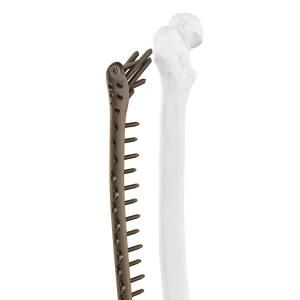
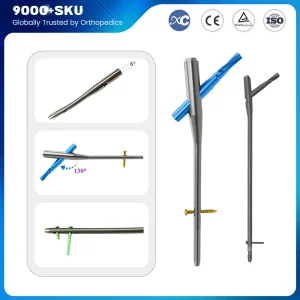
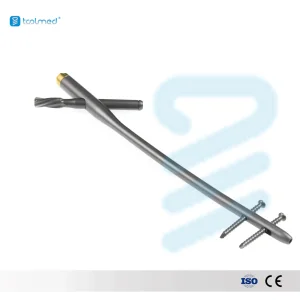
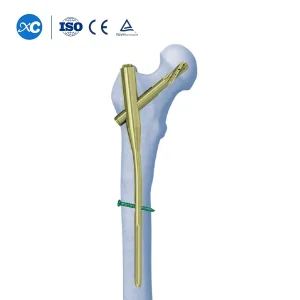
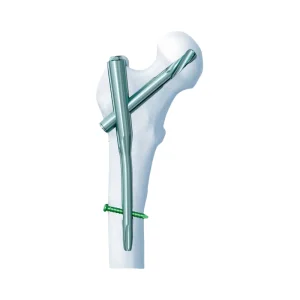
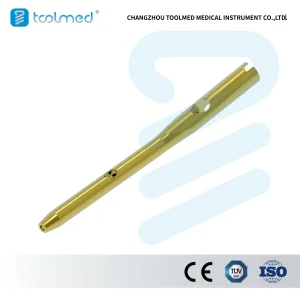
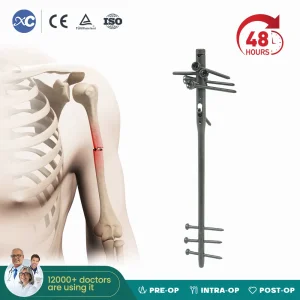
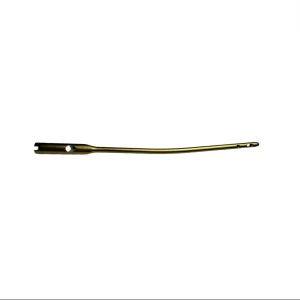
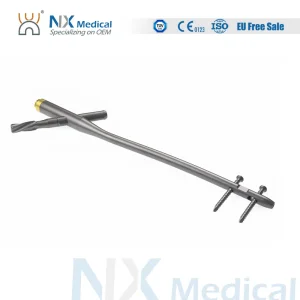
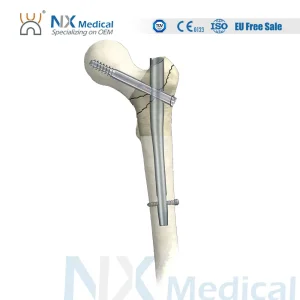
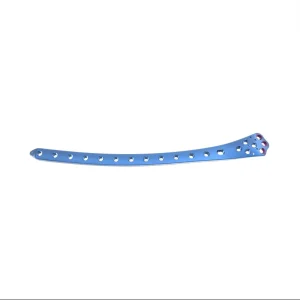
The global market for Femoral Intramedullary Nails is witnessing an unprecedented surge, driven by the increasing incidence of geriatric hip fractures and road traffic accidents. As a vital component of trauma care, these nails are now standard-of-care across North America, Europe, and Asia-Pacific regions.
Industrial production has shifted towards high-precision CNC machining and 3D additive manufacturing. This ensures that every intramedullary nail meets the exact anatomical requirements, reducing surgical time and improving patient outcomes through biological internal fixation.
The industry is moving towards "Smart Orthopedics," where manufacturing processes are integrated with digital surgery planning. As a top exporter, we align our production lines with global clinical feedback to refine nail geometry and locking mechanisms.
The landscape of orthopedic trauma is evolving rapidly. Today's surgeons demand more than just a titanium rod; they require sophisticated systems that promote early weight-bearing and minimize complications like "cut-out" in osteoporotic bone.
As leading Femoral Intramedullary Nails Manufacturers, we are at the forefront of these trends, investing in R&D to deliver implants that are not only durable but also anatomically intuitive.
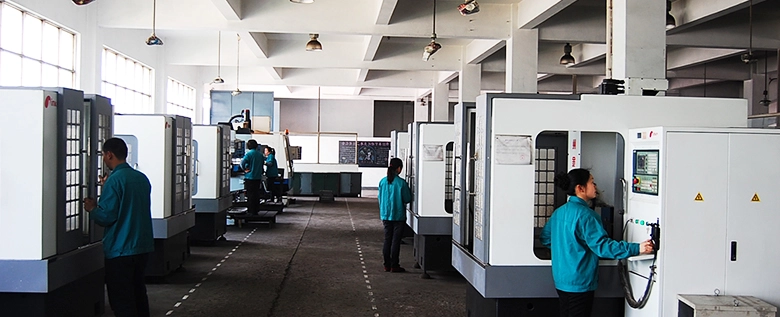
Global healthcare providers prioritize CE and ISO certified products that offer a balance between surgical reliability and cost-effectiveness. Our intramedullary nails are staples in public hospitals and private trauma centers across 80+ countries.
In developing regions, the focus is on robust, easy-to-use nail systems for high-energy trauma (traffic accidents). In aging societies (Japan, Europe), our PFNA systems are highly sought after for treating fragility fractures in osteoporotic elderly patients.
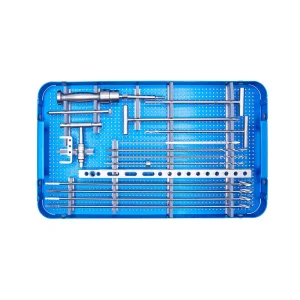
We provide comprehensive OEM/ODM services for international distributors, including localized labeling, instrument sets, and surgical training materials to ensure seamless adoption in local markets.
Countries Exported
Years Experience
Hospital Partners
Quality Inspected
We are most reputed manufacturers/exporters of Orthopedic Implants and Instruments & Star Export House company certified by Government.
We are exporting to more than 80 countries worldwide & pride ourselves on Superior Quality and Competitive Pricing, and we operate under a quality system that complies with ISO 9001:2015, EN ISO 13485:2016, CE & WHO: GMP Compliance. Many reputed companies in Europe and USA regularly buy from us.
Unlike many of our competitors, we don't compromise on quality in exchange for a cheaper price !! We believe human life is invaluable !! We understand your requirements, we recognize your needs! Come partner with us...
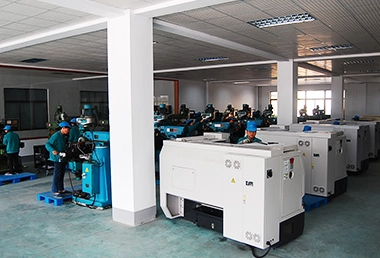
We have a highly equipped R&D lab and stringent quality control standards to ensure quality of our products as per international standards. Quality Control at Narang Medical starts from the raw material stage. This makes it possible for us to control the quality of every component that goes into manufacture of the finished product.
Our R&D team consists of highly qualified engineers who persistently conduct research and constantly seek feedback from the customers as they create new designs to meet the future needs of Orthopedic Surgeons worldwide. We are thus considered as a top Trauma & Orthopedic Implants company.
Leveraging China's world-class industrial infrastructure, we ensure a stable supply of medical-grade titanium and stainless steel, even during global market fluctuations.
Our scale of production allows us to offer premium orthopedic solutions at a fraction of the cost of Western competitors, without ever compromising on clinical efficacy.
With an in-house engineering team and rapid prototyping capabilities, we can move from clinical concept to finished product faster than any other global hub.
The femur, being the longest and strongest bone in the human body, requires exceptional stabilization when fractured. As specialized Femoral Intramedullary Nails Manufacturers, we recognize that the structural integrity of an intramedullary nail must mimic the natural biomechanics of the bone while providing a scaffold for healing. The global orthopedic implant industry is currently valued at billions of dollars, with intramedullary nailing representing a significant portion of the trauma segment.
Commercial stakeholders, including hospital procurement managers and medical device distributors, are increasingly looking for "Total Trauma Solutions." This includes not just the nail itself, but also the proximal and distal locking screws, end caps, and specialized instrumentation. The industrial trend is moving toward "Universal Systems"—nails that can be used for both left and right femurs, or retrograde and antegrade approaches—to reduce inventory costs for hospitals.
Historically, orthopedic implants focused solely on mechanical strength. However, the modern industrial approach emphasizes "Biological Fixation." This means the surface of the nail and its fit within the medullary canal are optimized to preserve blood flow. As an exporter to over 80 countries, we ensure our nails feature an anatomical bow and a tapered distal end to avoid stress risers and minimize the risk of secondary fractures.
Procurement needs vary by region. In Southeast Asia and Africa, there is a high demand for stainless steel variants due to their cost-effectiveness and durability in high-energy trauma cases. Conversely, in the North American and European markets, Titanium Alloy (TAN) is the gold standard due to its biocompatibility and superior fatigue strength. Our factory is equipped to produce both, ensuring that every local healthcare system can access the technology they need within their budget.
The advantage of our Chinese manufacturing facility lies in the integration of AI-driven quality control. Each batch of Femoral Intramedullary Nails undergoes rigorous testing, including fatigue testing, torque analysis, and corrosion resistance checks. By using automated polishing and anodizing lines, we ensure a consistent finish that prevents bacterial adhesion and promotes osseointegration. This technological edge is why many reputed companies in the USA and Europe trust us for their supply chain needs.
Looking ahead, the industry is exploring "Smart Nails" embedded with micro-sensors to monitor bone healing and weight-bearing in real-time. While these are still in the developmental phase, our R&D lab is already investigating conductive coatings and 3D printed lattice structures. Our commitment is to remain the most trusted partner in the orthopedic trauma field, bridging the gap between advanced engineering and human health.
 Voila Orthopedic Implants